Awareness worked. That is why there is a next question.
I want to be clear about something before I go any further. The change in how we talk about mental health over the past two decades is one of the most important cultural shifts of our generation. Stigma has been challenged, and it is more acceptable than it has ever been to say “I am not okay.” That was hard-won, it has changed lives, and it deserves to continue.
But every meaningful movement eventually reaches another question. Not because the first chapter was wrong, but because it worked.
The first chapter asked whether we could create a world where people feel safe enough to say “I’m struggling.” My sense is that the next chapter asks something different. Once someone says it, do we know how to respond?
Those are not the same capability, and the evidence suggests we have built the first far more than the other.
Fewer than half of managers have been trained to have a conversation about mental health. In the UK, more than 40% of teachers say they do not feel confident helping a student with their mental health, even though most secondary teachers report seeing anxiety and depression rising among their pupils.
Glenn Close described what we are facing as a “crisis of care” in her 2023 TEDWomen talk. Her focus is largely the formal system: enough providers, within reach, without penalty for having sought help. That matters enormously. But I think there is a second gap alongside it, one that occurs earlier.
Where distress actually shows up
Specialist care is indispensable, and nothing I am saying here is meant to diminish or replace it. But I have come to believe that mental wellbeing cannot become the responsibility of specialists alone.
Distress does not wait for an appointment. It shows up at the kitchen table, in a team meeting, in a message that feels slightly off, in the teenager who says “I’m fine” a little too quickly. Long before anyone books time with a professional, and often instead of it, the first person to encounter someone’s struggle is a friend, a partner, a parent, a manager or a teacher.
Most of those people care. They notice something. And then they hesitate, worried about saying the wrong thing, doing too little, doing too much, overstepping. Not because they lack compassion. Because they lack confidence. Most of us were simply never taught this.
There is often something else underneath the hesitation too. Being with someone else’s pain stirs up our own discomfort, and many of our instinctive responses (reassuring, fixing, changing the subject) quietly serve our need to make that discomfort go away. To be present with another person’s difficult emotion, we need some capacity to be with our own.
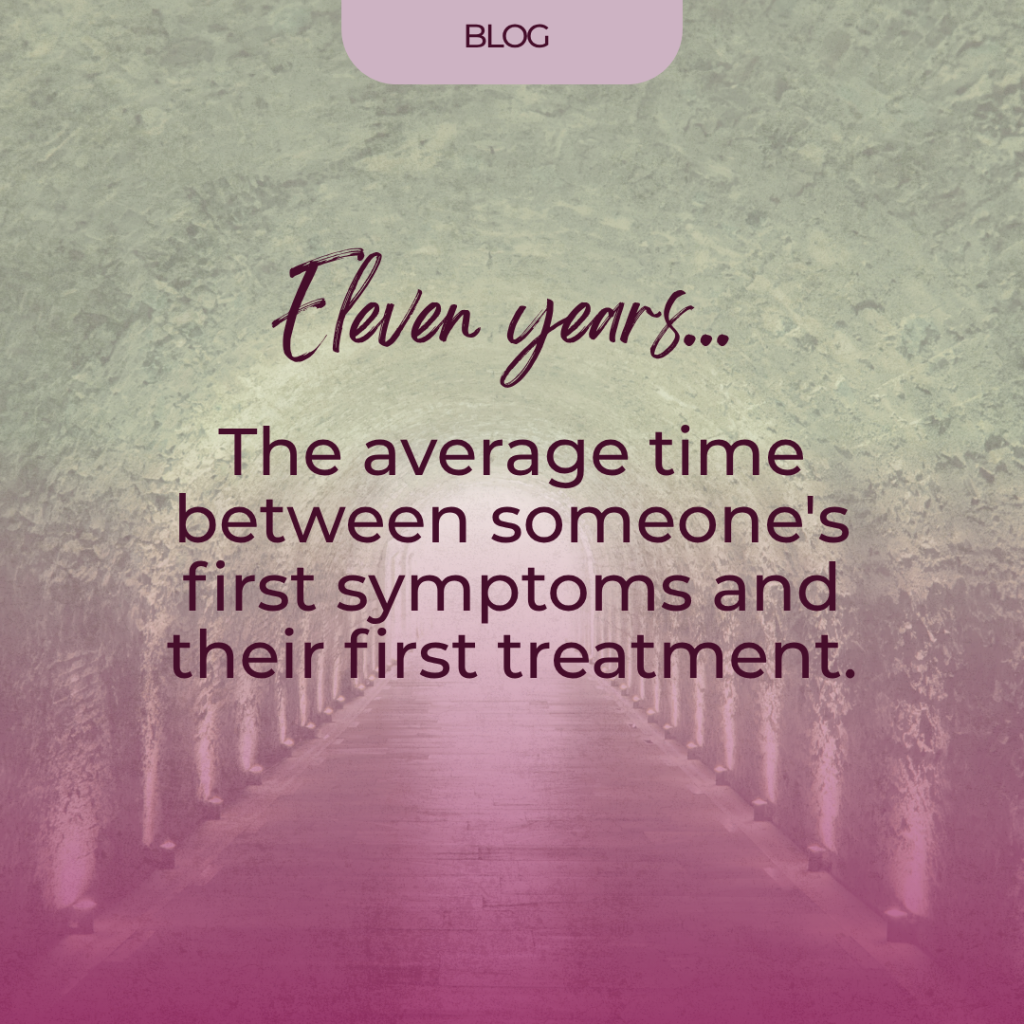
What strikes me is how directly this connects back to those eleven years. Research on psychological safety suggests that whether people speak up depends partly on what they expect will happen when they do. If the people closest to us seem unsure, uncomfortable or quick to move on, it makes sense that many of us wait. We have spent years encouraging people to speak. As World Mental Health Day reminded us earlier this month, real voices only lead to real change when someone is ready to hear them.
What it actually takes
The person who sits beside someone in difficulty does not need to diagnose them, treat them or fix their life. There is good evidence that human presence itself matters. In one well-known study, simply holding the hand of a trusted partner reduced the brain’s response to threat. Support does not always have to remove the problem in order to change what it is like to carry it.
But presence is not enough on its own either. Not every struggle is an illness, and that does not mean every struggle is insignificant. Grief, fear, disappointment and strain are part of being human and taking them seriously does not require treating them as pathology. At the same time, some distress does need specialist care, and the sooner it gets there the better. The ability to tell these apart, and to respond to what this person actually needs right now, is a skill. I think of it as discernment, and it runs through everything else.
Good support also leaves people with their own agency intact. The aim is not to take over, but to help someone feel less alone while preserving their capacity to navigate what comes next.
The shift I think we need
This is my own thinking rather than something the research has yet proven. But my instinct is that if more of the people already present in someone’s life could notice earlier, respond well and gently help that person towards support, we could potentially narrow that eleven-year gap. It is simply easier, in the early and uncertain stages, to talk to someone you trust than to seek out a clinician alone.
That is what Mental Health First Response is about. It does not replace awareness; it builds capability on top of it. It is not about turning people into therapists. It is about building the confidence and capability to notice when something has changed, respond in a way that opens the door rather than closing it, stay present without rushing to fix, and connect someone to capable help when that is what they need. For the person who needs specialist care, a capable friend or colleague can be the bridge that gets them there sooner. For the many more whose distress does not need clinical intervention, that same presence may be an important part of what enables them to move through it.
Healthy communities have always relied on ordinary people who know how to carry one another through difficult times. Perhaps we have forgotten how to do it well. Perhaps we were never intentionally taught.
The question is no longer only whether people are willing to ask for help. It is whether we know how to show up well when they do.