


The Art of Ending Well
According to William Bridges, whose work on transitions has shaped decades of leadership and change thinking, every meaningful transition begins not with a new start, but with an ending. He reminds us that until we’ve acknowledged and honoured what is ending, the roles, routines, and identities that have defined us, we can’t fully step into what’s next.
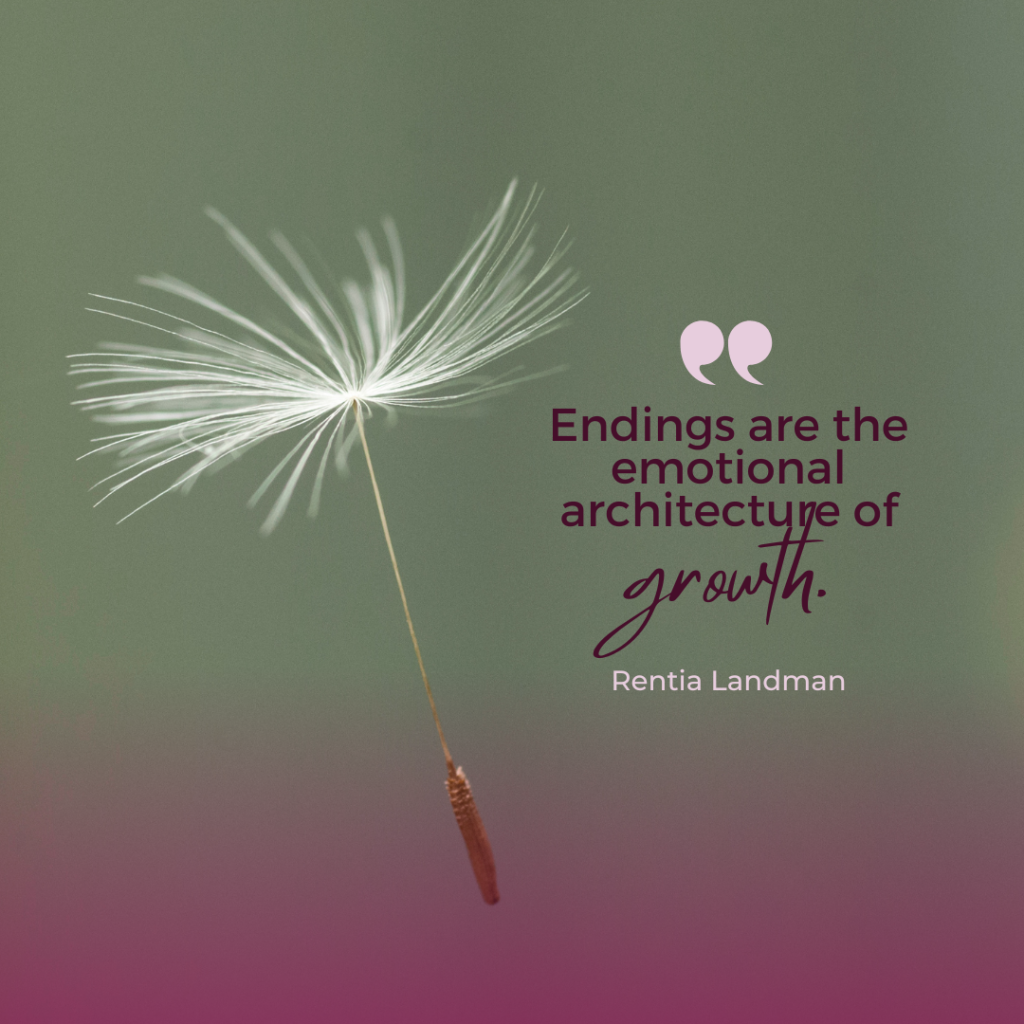
In organisations, and in life, we’re far better at planning beginnings than navigating endings. We celebrate launches, not closures. Yet endings are the emotional architecture of growth. How we close one chapter shapes the quality of the next.
The psychology of closure
Behavioural science tells us that our brains crave completion. We seek the satisfaction of finishing, of crossing items off the list and resolving open loops. But emotional closure is different. It’s not about efficiency; it’s about meaning.
For leaders: creating space to end well
For leaders, endings are collective moments. How a leader helps a team close a year, a project, or even a relationship sets the emotional tone for what comes next.
Ending well begins with acknowledgment.
- Invite reflection before celebration. Ask: What did we learn? What will we take forward?
- Balance recognition of results with recognition of growth, skills developed, trust built, resilience tested.
- Make space for grief or frustration too. As Bridges noted, “Every transition begins with letting go.” People need permission to acknowledge what they’re leaving behind, the effort, identity, or sense of stability attached to a chapter now closing.
And then, celebrate.
Not the busyness, but the becoming. Celebrate not only what was achieved, but who people became through it.
Ending well within ourselves
On a personal level, ending well often means pausing to ask:
- What part of this year do I want to carry with me?
- What am I ready to release?
It might be a habit that no longer serves you, an expectation that’s too heavy, or even an inner narrative that limits what’s possible next. Letting go doesn’t mean forgetting, it means making peace with what’s complete.
When we skip this step, we risk dragging unfinished emotions into new beginnings, colouring what’s next with what’s unresolved.
A final reflection
As you and your teams prepare to step out of the year, resist the urge to rush past the ending. Take time to mark it.
Gather your people. Reflect on what you built together, what you overcame, and what you’ve learned. Speak gratitude, not just for outcomes, but for effort, courage, and presence.
Because when we end well, we begin again with lighter hearts and clearer minds.
Before you step into 2026, take time to honour what 2025 has been. Endings, celebrated well, are the quiet beginnings of everything that follows.
Related Posts
Post-School Pathways – One Goal, Many Roads
There’s a quiet shift that happens in every home when the final school years...
Empowerment Through Presence: Lessons from Parenting for Leadership
Not long ago, I wrote a blog for Career Thinking about the shift parents can make...
Grade 9 Subject Choices – A Test of Trust for Parents
It’s one of those moments that sneaks up on us. One day, we’re packing school...
Wellbeing Isn’t Comfort, It’s Capacity
If resilience is the quiet strength that carries us, then wellbeing is the space...